[Product Updates]
[Product Updates]
What if Data could Describe Itself?
What if Data could Describe Itself?
What if Data could Describe Itself?
9 Dec 2025
Universal, Self-Describing Data
In Douglas Adams's The Hitchhiker's Guide to the Galaxy, the Babel Fish translates any spoken language instantly. We're building the same thing for data.
Instead of applications speaking different data languages requiring expensive translation layers, Coretext lets them understand each other natively. Create and style Coretext data in Amorfs Studio, or use our open source code to bring it to life in your own projects.
The Problem: Exporting Data Loses Its Meaning
Users waste billions of hours annually retyping the same information across different applications. Organizations spend US$50,000-$150,000 per year maintaining just a single API integration. When data moves between applications, it becomes "orphaned"—separated from the context needed to interpret it. Is "Tim" a person or a first name? Is "Apple" a fruit or a company? Traditional formats can't tell.
But there's another problem. When you share a business card, your carefully crafted brand styling disappears. The recipient sees your data in their app's generic layout. Your visual identity—colors, logos, typography—is stripped away because data and presentation are artificially separated.
This turns applications into gatekeepers for both knowledge and presentation. Brittle integrations break with every update. AI systems are forced to guess at relationships that should be explicit, leading to retraining and hallucinations.
The Solution: An Open Standard for Self-Presenting Universal Data
Coretext is to data what HTML and CSS is to documents—an open standard that any application can read and write, unifying content, structure and presentation.
Coretext solves the orphaned data problem by separating what something is (an abstract concept) from how it's expressed (text, numbers, any representation). This removes ambiguity and abstracts away language barriers, making data meaningful in its own right.
Amorfs Studio is like a web browser with developer tools built in.
Amorfs renders Coretext beautifully and lets you edit concept structures and styling visually. But just as you can view HTML in Chrome, Firefox, or VS Code, you'll be able to work with Coretext in multiple tools:
Amorfs Studio (visual editor, like Chrome DevTools)
Any text editor (Coretext is human-readable)
Custom applications (embed the open-source parser and renderer)
API consumers (read/write Coretext programmatically)
Benefits of Universal Data
Storing information as uniform concepts unlocks capabilities that are difficult or impossible with traditional data formats:
Language agnostic: Synonymous words, abbreviations, and translations resolve correctly into the same concept, avoiding duplicates.
Self-organizing: Fragments of data merge seamlessly at the concept level across different standards and applications.
Semantic chains: Recursive structures capture ever-more-detailed distinctions, reducing guesswork for AI agents.
Extended context: Metadata for concepts includes confidence, importance, timeframe, and provenance—making automated cleansing easier.
Portable presentation: Data carries its intended styling while remaining overridable by recipients—preserving brand identity without forcing it.
Zero-knowledge storage: Expressions can be encrypted without compromising search and retrieve operations, supporting unprecedented data security.
Four Core Innovations
1. Concept-Expression Demarcation
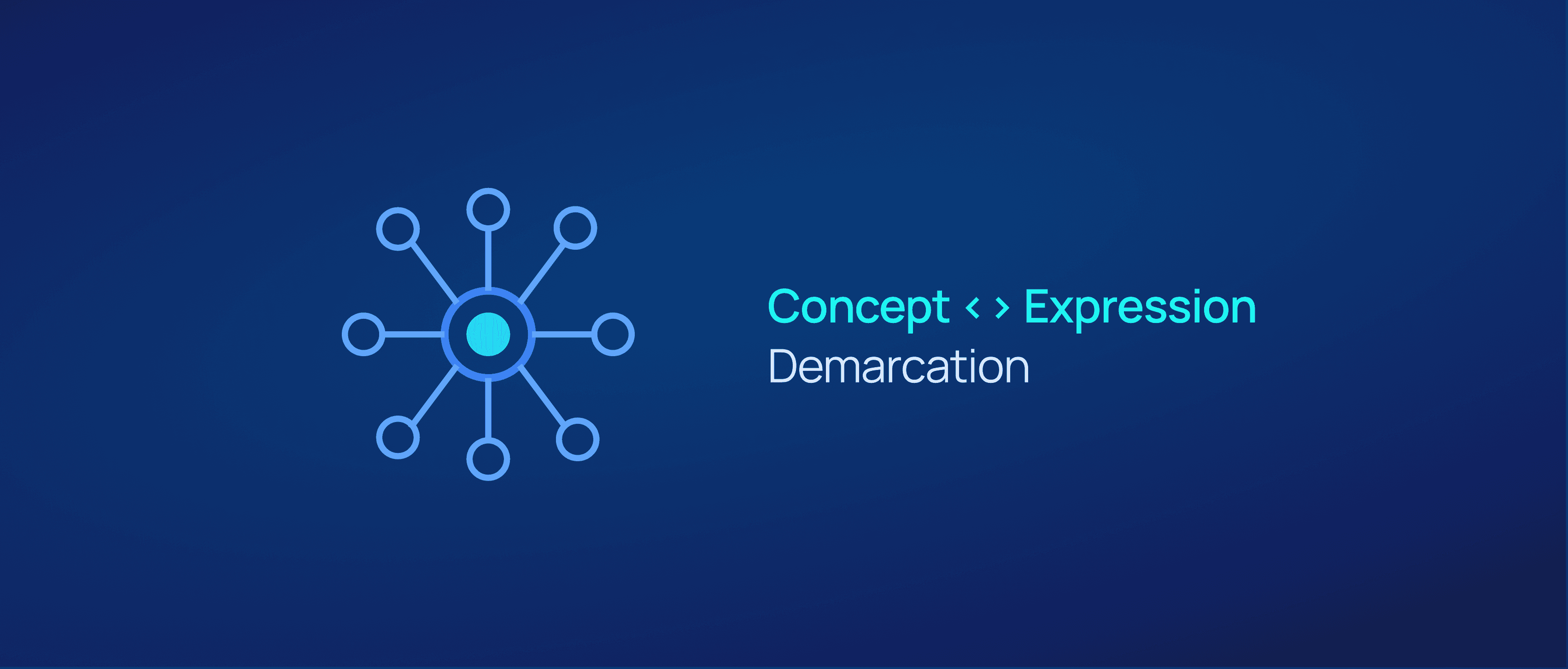
One concept, many expressions—"NSW" and "New South Wales," text and audio, mobile and desktop formats, brand colors and logos. No artificial distinction between parameters, values and styling. Recipients see your intended presentation but can override with their preferences—like user stylesheets in browsers, but for data.
2. Recursive Associations as First-Class Concepts
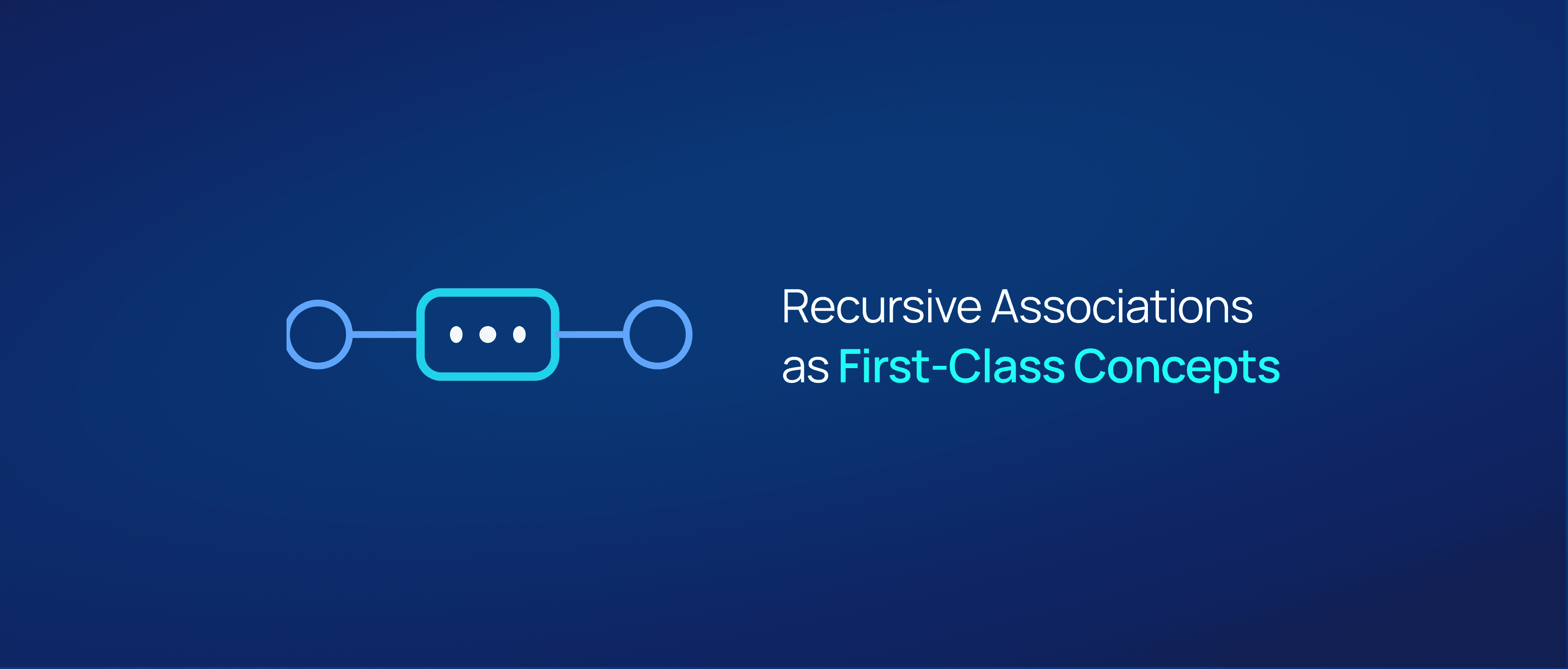
Traditional formats treat relationships as second-class connectors—you can link data but can't describe the links themselves. Amorfs solves this by storing relationships (subject-verb-object triples) as concepts, making them referenceable, queryable, and composable.
Relationships are concepts you can reference, query, and chain. Track when a married name changed by attaching metadata to the relationship itself. Build supply chains:
shipment → previous → previous → origin.
Context folds forward indefinitely—what used to require RDF reification or complex JSON-LD becomes just another association.
3. Concept-level Metadata
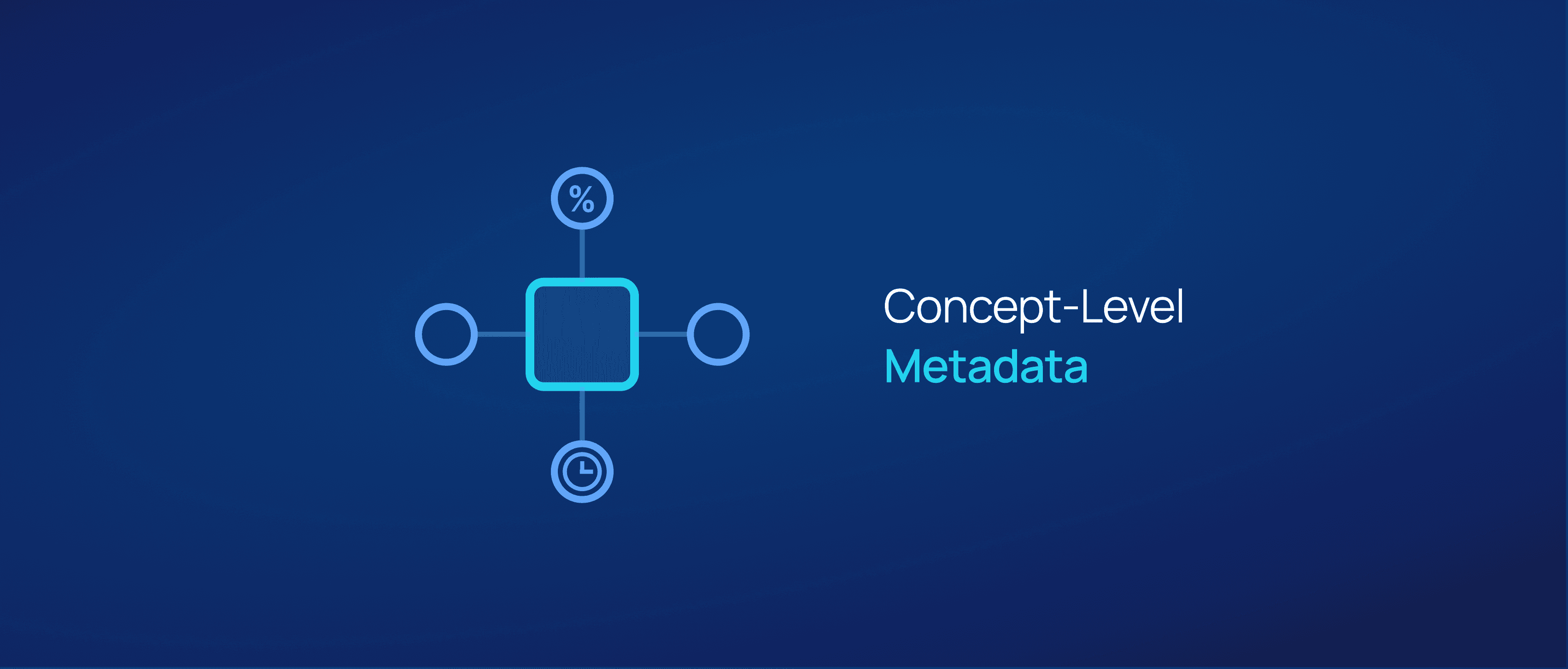
Concepts carry optional metadata, like confidence, importance, timeframe, and provenance, turning raw data into audit-ready, decision-grade information.
title [sir {100% +1 2004-}]
Translation: Valid from 2004 onwards, 100% confidence, high importance
Enables automated conflict resolution, temporal queries, quality filtering, compliance trails, AI-grade reasoning.
4. Self-Contained Presentation Layer
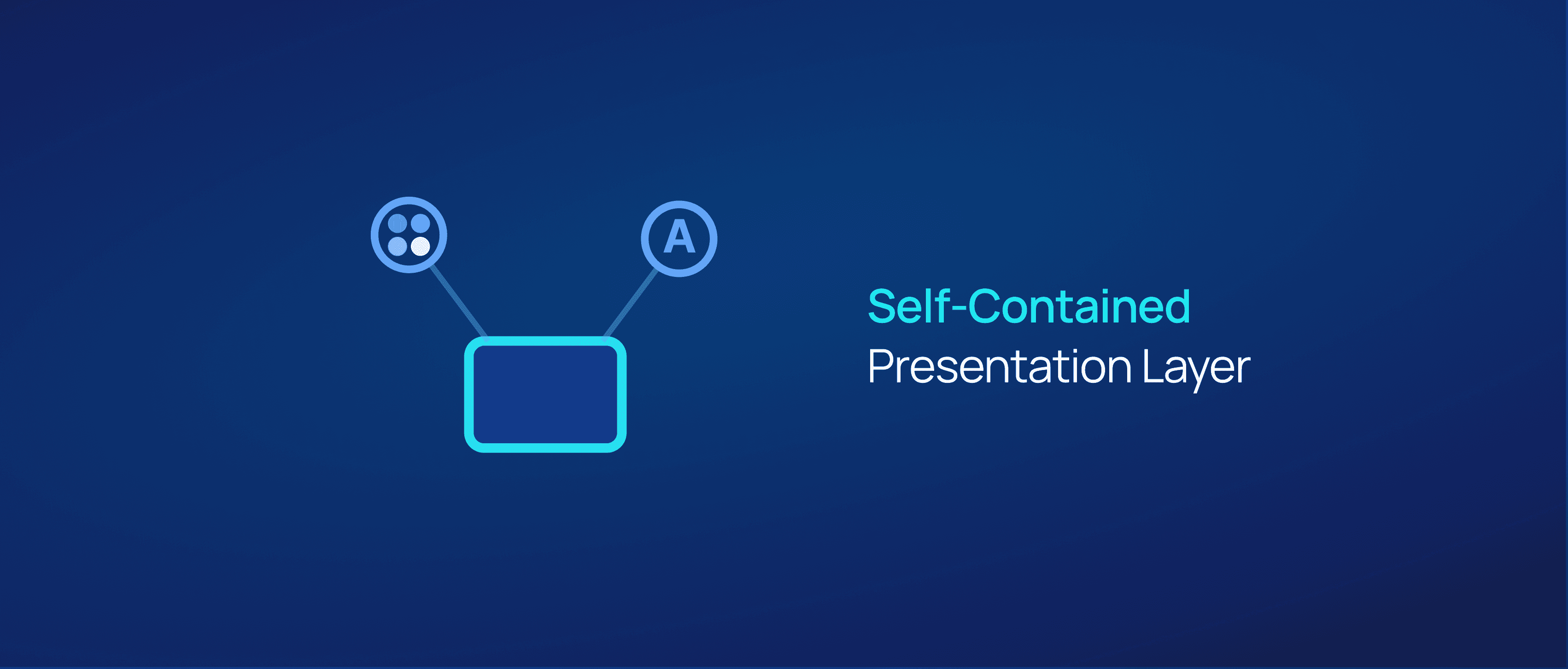
Coretext can include styling and layout specifications as concepts, making data self-presenting while remaining overridable—solving the "data loses its look" problem. Because styling is just another concept, it has all the concept functions. Styling is searchable (find anyone using an old logo), can be versioned (useful for branding updates), and can be linked to a timeframe (update contact styling for a new role, without losing the old style).
Universal, Self-Describing Data
In Douglas Adams's The Hitchhiker's Guide to the Galaxy, the Babel Fish translates any spoken language instantly. We're building the same thing for data.
Instead of applications speaking different data languages requiring expensive translation layers, Coretext lets them understand each other natively. Create and style Coretext data in Amorfs Studio, or use our open source code to bring it to life in your own projects.
The Problem: Exporting Data Loses Its Meaning
Users waste billions of hours annually retyping the same information across different applications. Organizations spend US$50,000-$150,000 per year maintaining just a single API integration. When data moves between applications, it becomes "orphaned"—separated from the context needed to interpret it. Is "Tim" a person or a first name? Is "Apple" a fruit or a company? Traditional formats can't tell.
But there's another problem. When you share a business card, your carefully crafted brand styling disappears. The recipient sees your data in their app's generic layout. Your visual identity—colors, logos, typography—is stripped away because data and presentation are artificially separated.
This turns applications into gatekeepers for both knowledge and presentation. Brittle integrations break with every update. AI systems are forced to guess at relationships that should be explicit, leading to retraining and hallucinations.
The Solution: An Open Standard for Self-Presenting Universal Data
Coretext is to data what HTML and CSS is to documents—an open standard that any application can read and write, unifying content, structure and presentation.
Coretext solves the orphaned data problem by separating what something is (an abstract concept) from how it's expressed (text, numbers, any representation). This removes ambiguity and abstracts away language barriers, making data meaningful in its own right.
Amorfs Studio is like a web browser with developer tools built in.
Amorfs renders Coretext beautifully and lets you edit concept structures and styling visually. But just as you can view HTML in Chrome, Firefox, or VS Code, you'll be able to work with Coretext in multiple tools:
Amorfs Studio (visual editor, like Chrome DevTools)
Any text editor (Coretext is human-readable)
Custom applications (embed the open-source parser and renderer)
API consumers (read/write Coretext programmatically)
Benefits of Universal Data
Storing information as uniform concepts unlocks capabilities that are difficult or impossible with traditional data formats:
Language agnostic: Synonymous words, abbreviations, and translations resolve correctly into the same concept, avoiding duplicates.
Self-organizing: Fragments of data merge seamlessly at the concept level across different standards and applications.
Semantic chains: Recursive structures capture ever-more-detailed distinctions, reducing guesswork for AI agents.
Extended context: Metadata for concepts includes confidence, importance, timeframe, and provenance—making automated cleansing easier.
Portable presentation: Data carries its intended styling while remaining overridable by recipients—preserving brand identity without forcing it.
Zero-knowledge storage: Expressions can be encrypted without compromising search and retrieve operations, supporting unprecedented data security.
Four Core Innovations
1. Concept-Expression Demarcation
One concept, many expressions—"NSW" and "New South Wales," text and audio, mobile and desktop formats, brand colors and logos. No artificial distinction between parameters, values and styling. Recipients see your intended presentation but can override with their preferences—like user stylesheets in browsers, but for data.
2. Recursive Associations as First-Class Concepts
Traditional formats treat relationships as second-class connectors—you can link data but can't describe the links themselves. Amorfs solves this by storing relationships (subject-verb-object triples) as concepts, making them referenceable, queryable, and composable.
Relationships are concepts you can reference, query, and chain. Track when a married name changed by attaching metadata to the relationship itself. Build supply chains:
shipment → previous → previous → origin.
Context folds forward indefinitely—what used to require RDF reification or complex JSON-LD becomes just another association.
3. Concept-level Metadata
Concepts carry optional metadata, like confidence, importance, timeframe, and provenance, turning raw data into audit-ready, decision-grade information.
title [sir {100% +1 2004-}]
Translation: Valid from 2004 onwards, 100% confidence, high importance
Enables automated conflict resolution, temporal queries, quality filtering, compliance trails, AI-grade reasoning.
4. Self-Contained Presentation Layer
Coretext can include styling and layout specifications as concepts, making data self-presenting while remaining overridable—solving the "data loses its look" problem. Because styling is just another concept, it has all the concept functions. Styling is searchable (find anyone using an old logo), can be versioned (useful for branding updates), and can be linked to a timeframe (update contact styling for a new role, without losing the old style).
Share to
Latest Post
[Product Updates]
Product Update: Feature Lock Complete, Beta Launch Next Week
5 Dec 2025
[Product Updates]
Product Update: Feature Lock Complete, Beta Launch Next Week
5 Dec 2025
[Product Updates]
Product Update: Feature Lock Complete, Beta Launch Next Week
5 Dec 2025

[Product Updates]
The Car and the Cam
13 Apr 2025
[Product Updates]
The Car and the Cam
13 Apr 2025
[Product Updates]
The Car and the Cam
13 Apr 2025

[Guides & How-tos]
Inspiring Living Spaces
6 Nov 2024
[Guides & How-tos]
Inspiring Living Spaces
6 Nov 2024
[Guides & How-tos]
Inspiring Living Spaces
6 Nov 2024


PRODUCTS
Amorfs Extension
FORUM
Showcase
SUPPORT
FAQ
Don’t want to miss anything?
Get weekly updates on the newest posts, events and tips right in your mailbox.
" height="47.8243px" id="Fi98aqQOS" width="48.001px"/><path d="M 20.148 22.45 L 21.494 15.115 L 13.655 15.115 L 13.655 12.521 C 13.655 8.646 15.176 7.155 19.111 7.155 C 20.333 7.155 21.317 7.185 21.883 7.244 L 21.883 0.596 C 20.81 0.298 18.186 0 16.666 0 C 8.646 0 4.949 3.786 4.949 11.955 L 4.949 15.115 L 0 15.115 L 0 22.45 L 4.949 22.45 L 4.949 38.409 C 6.805 38.869 8.747 39.115 10.746 39.115 C 11.73 39.115 12.701 39.055 13.654 38.94 L 13.654 22.45 L 20.147 22.45 Z" fill="rgb(255, 255, 255)" height="39.11523px" id="o10gvlFLv" transform="translate(13.253 8.885)" width="21.883200000000002px"/></g></svg>)
PRODUCTS
Amorfs Extension
SUPPORT
FAQ
Don’t want to miss anything?
Get weekly updates on the newest posts, events and tips right in your mailbox.
PRODUCTS
Amorfs Extension
FORUM
Showcase
SUPPORT
FAQ
Don’t want to miss anything?
Get weekly updates on the newest posts, events and tips right in your mailbox.